
Nosečnost
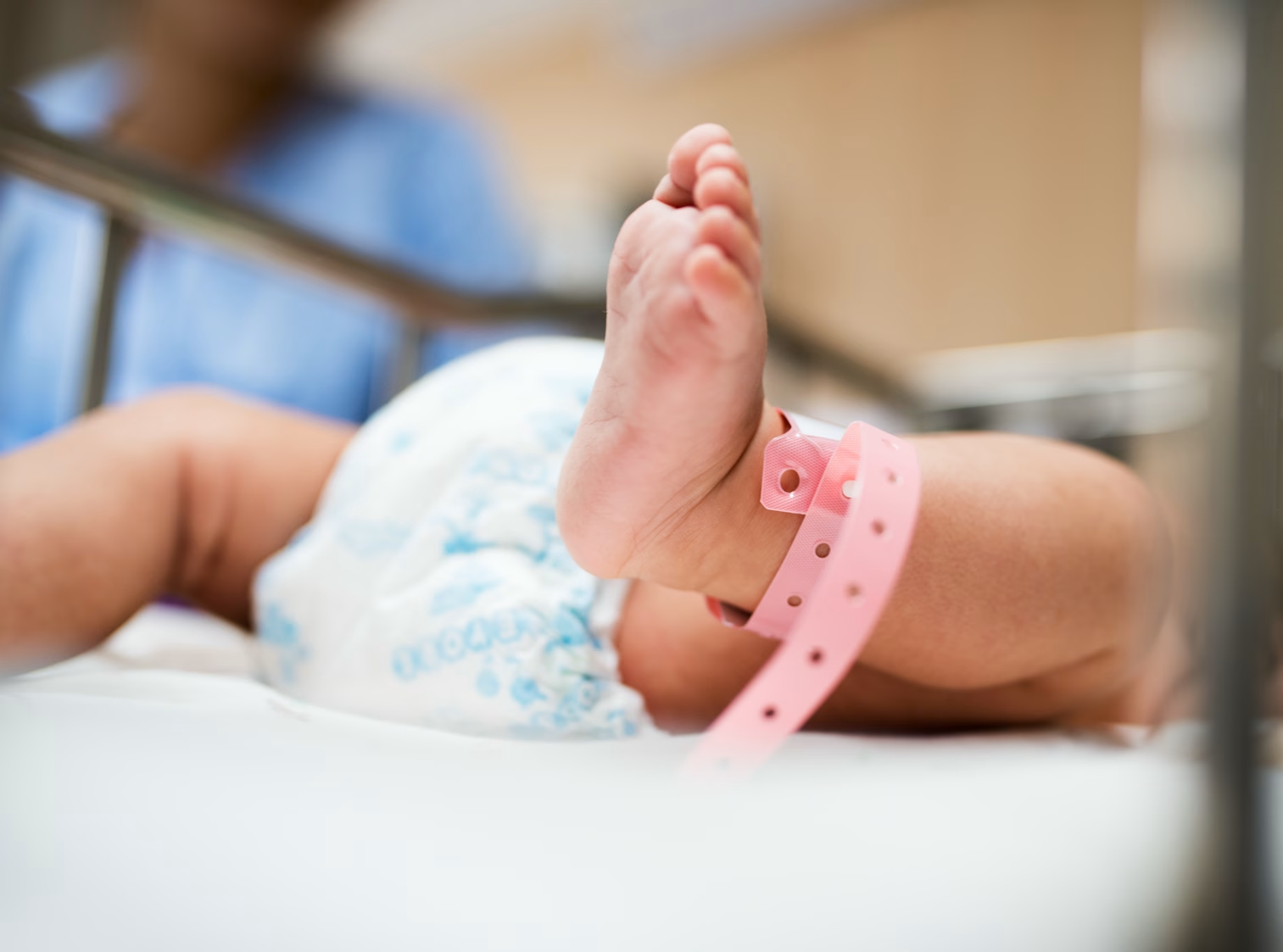
Giving birth in Slovenia as an expat involves specific hospital routines and administrative requirements. Following an uncomplicated vaginal delivery, mothers typically stay in the maternity ward for 2 to 3 days. This guide details essential delivery room procedures, newborn screening tests, and mandatory bureaucratic steps—including registering for a birth certificate (Rojstni list), health insurance (ZZZS), and applying for parental leave through the Social Work Centre (CSD).
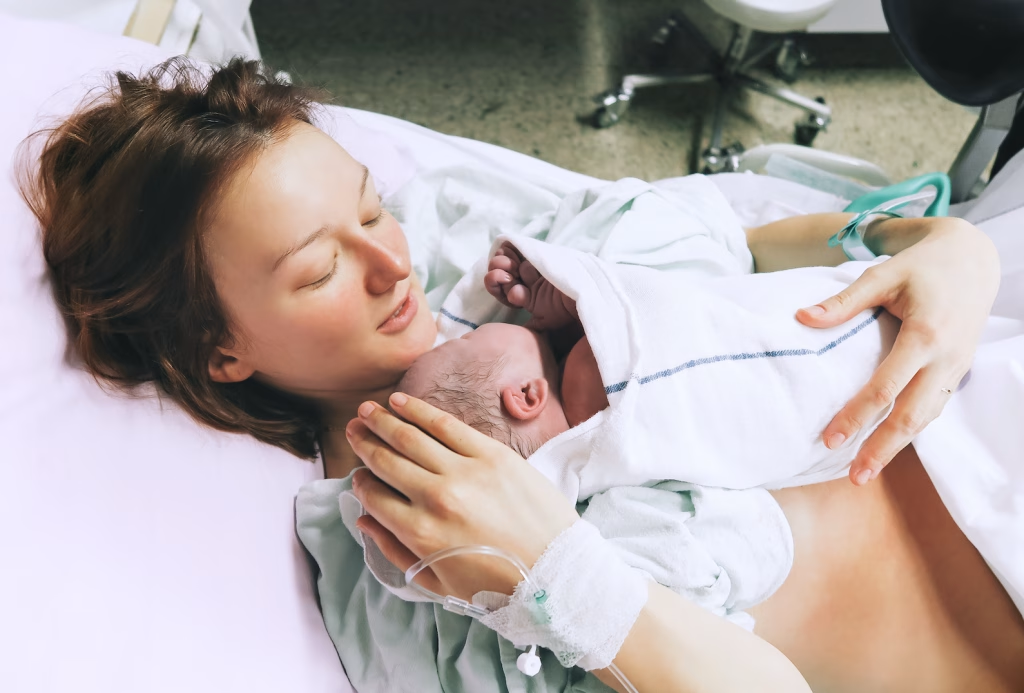
1. What to Expect in the Delivery Room & Postnatal Ward
Slovenian maternity hospitals (Porodnišnica) place a high emphasis on immediate bonding, skin-to-skin contact, and early breastfeeding support.
Standard Delivery Room Procedures
Immediately following delivery, the medical team conducts standard primary care measures:
- Cord Clamping & Physical Measurements: Delayed cord clamping is standard where clinically appropriate. The medical staff records your newborn’s weight, body length, and head circumference.
- Vitamin K Administration: A single intramuscular Vitamin K injection is routinely administered to prevent hemorrhagic disease of the newborn.
First 48 Hours in the Postnatal Ward
- Weight Fluctuation: It is medically normal for newborns to lose up to 10% of their birth weight within the first 48 hours. Most babies regain their birth weight within 7 to 10 days.
- Feeding & Behavior: On day 1, newborns may spit up remaining amniotic fluid or meconium and exhibit low interest in feeding. Skin-to-skin contact is encouraged to stimulate lactation.
- Daily Routines: Pediatric nurses conduct daily morning checks, weight monitoring, and umbilical cord stump care. Full pediatric examinations take place on day 1 and on the day of discharge.
2. Mandatory Newborn Screening Tests in Slovenia
Before discharge (or on day 3 postpartum), Slovenian hospitals conduct universal newborn screenings to ensure early detection of health conditions:
- Hearing Screening (TEOAE): Transient Evoked Otoacoustic Emissions test to assess inner ear response.
- Pulse Oximetry: Non-invasive monitoring of blood oxygen saturation to screen for critical congenital heart defects.
- Red Reflex Eye Exam: A visual check performed by the pediatrician to screen for congenital eye conditions.
- Metabolic Heel-Prick Blood Test: Conducted on day 3 to screen for rare inherited metabolic disorders and hypothyroidism.
3. Administrative Requirements & Legal Documentation for Expats
Navigating Slovenian bureaucracy after childbirth requires completing specific procedures across different public entities:
[Maternity Hospital] ➔ Issues Notification of Birth to Official Register
        │
        ▼
[Administrative Unit / Upravna Enota] ➔ Issues Birth Certificate (Rojstni list) & EMŠO
        │
        ▼
[Social Work Centre / CSD] ➔ Handles Paternity, Parental Leave & Child Benefits
Paternity Acknowledgment (Priznanje očetovstva)
If the parents are not legally married, the father must formally acknowledge paternity. This procedure can be completed either before birth or postpartum at:
- The local Social Work Centre (Center za socialno delo – CSD),
- The Administrative Unit (Upravna enota), or
- Before a notary public.
Naming, Residence & Birth Certificate (Rojstni list)
While in the hospital, you will fill out official forms regarding the child’s given name and permanent address.
- The hospital submits these details directly to the Official Register (Matični register), generating your child’s Unique Master Citizen Number (EMŠO).
- The local Administrative Unit (Upravna enota) then processes and issues the official Birth Certificate (Rojstni list).
Health Insurance Registration (ZZZS)
- Temporary Coverage: From birth, your newborn is automatically covered under the mother’s compulsory health insurance card (kartica zdravstvenega zavarovanja).
- Permanent Registration: Within 60 days of birth, the child must be officially registered as a dependent under a parent’s compulsory policy via their employer using the official Birth Certificate.
4. Maternity Leave, Paternity Leave & Financial Benefits
Expats residing in Slovenia with valid residency status and social security contributions are eligible for parental benefits managed by the CSD:
- Maternity Leave (Materinski dopust): Lasts 105 days, starting 28 days prior to your Expected Date of Delivery (EDD). You should apply at your local CSD up to 60 days before your EDD.
- Paternity Leave (Očetovski dopust): Fathers are entitled to 30 calendar days of paid paternity leave.
- Parental Leave (Starševski dopust): Lasts 260 days in total, shared between parents after maternity leave concludes.
- Child Benefit (Otroški dodatek): Dependent on income tier. Apply at the CSD within 30 days of birth to receive benefits retroactively from the month of birth.
5. Returning Home: Safe Transport Requirement
Slovenian road safety law mandates that all newborns leaving the hospital must be transported in an approved, rear-facing infant car seat (lupinica). Hospital staff may check that your car seat is correctly fitted prior to discharge.
Pomembno obvestilo: Informacije na spletni strani Nosecka.net niso nadomestilo za posvet z zdravnikom! Spletna stran Nosecka.net je namenjena zagotavljanju splošnih informacij, ki v nobenem primeru niso prilagojene za posebne namene, zahteve ali potrebe posamezne osebe. Več informacij v Splošni pogoji.